Insulation performance acts as one of the core indicators to guarantee equipment safety, personal safety and system stability during the whole operation and maintenance process of electrical equipment. As the most basic and commonly used method to detect the insulation condition of electrical equipment, the insulation resistance test works like an invisible guardian. It constantly checks potential equipment hazards and avoids safety risks such as electric leakage, short circuit and fire in advance.
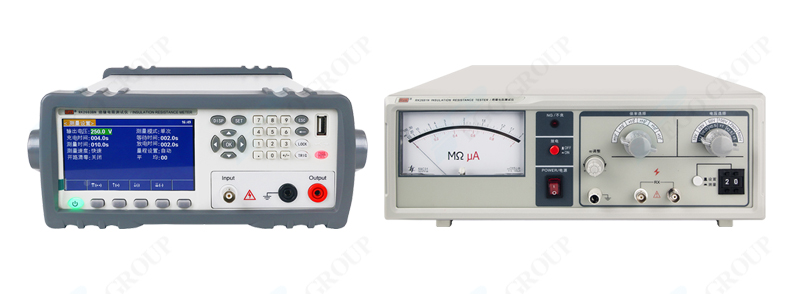
The insulation resistance test plays an irreplaceable role both in high-voltage equipment for industrial production and household electrical appliances in daily life. Operators use professional insulation resistance testers to complete detection work accurately.
1. Definition of Insulation Resistance Test
In simple terms, the insulation resistance test is a standard electrical detection method. Professional testing instruments apply specified DC high voltage to the insulation parts of electrical equipment, measure the current blocking capacity of the insulation layer, namely the insulation resistance value. It further judges the integrity of the insulation layer and identifies defects including aging, damage and moisture ingress.
Insulation layers such as cable insulation sheath, motor winding insulating varnish and transformer insulating oil mainly separate live parts from non-live parts, and isolate live parts with different potentials to prevent current leakage. An ideal insulation material conducts no current at all. In practical application, however, all insulation materials carry weak conductivity.
The insulation resistance measures such weak conductivity. A higher resistance value means better insulation performance, less current leakage and safer equipment operation. On the contrary, an excessively low resistance value indicates defects in the insulation layer and may cause electric leakage accidents.
2. Core Principle of Insulation Resistance Test
The test follows Ohm’s law. The testing system uses a DC high-voltage power supply to apply rated test voltage to the insulation layer of the tested equipment. It measures the leakage current flowing through the insulation layer and calculates the insulation resistance by the formula R=U/I (R for insulation resistance, U for test voltage, I for leakage current).
We adopt DC high voltage rather than AC high voltage for two main reasons. First, DC voltage generates no alternating electric field inside the insulation layer. It eliminates interference from polarization loss and dielectric loss to test results and reflects the real insulation performance accurately. Second, DC high voltage causes little damage to the insulation layer. It never damages the insulation structure during testing and ensures normal equipment operation after detection.
Environmental factors greatly affect test results, among which temperature and humidity have the most obvious impact. When the temperature rises, molecular movement of insulation materials accelerates, leakage current increases, and insulation resistance decreases accordingly. When humidity goes up, the insulation layer absorbs moisture on its surface. Conductive moisture reduces the insulation resistance. Testers must record ambient temperature and humidity on site and revise test data when necessary to ensure accuracy.
3. Judgment Standards for Insulation Resistance
No unified standard value applies to insulation resistance. We confirm qualified criteria according to equipment type, rated voltage and service environment. The core judgment rules are as follows:
- Compare with factory standards. The insulation performance remains good if the test value is not lower than the factory value or 80% of the factory standard with no obvious declining trend.
- Comply with industrial specifications. Different industries set clear requirements for insulation resistance. Low-voltage electrical appliances normally keep insulation resistance above 1MΩ. For high-voltage equipment such as 10kV units, the standard value is no less than 1000MΩ.
- Compare with historical test data. If the current value drops by over 30% without reasonable causes like humidity change, the insulation layer may suffer aging or damage and requires further inspection.
A test value at or close to zero means complete damage of the insulation layer. The equipment carries severe electric leakage risks. Users must stop operation immediately and arrange maintenance or replacement.
4. Significance of Insulation Resistance Test
Simple as it is, the insulation resistance test matters greatly in electrical safety assurance. Its significance lies in three aspects:
- Protect personal safety. Degraded insulation performance causes electric leakage. Contact with leakage equipment leads to electric shock casualties. The test identifies hidden leakage risks in time and prevents personal electric accidents.
- Protect equipment safety. Damaged insulation layers cause internal short circuits, burn components, and even trigger explosion and fire. Regular testing eliminates hidden troubles in advance, extends equipment service life and cuts maintenance costs.
- Ensure system stability. In industrial production and power supply, stable operation of electrical equipment directly affects production safety and power supply reliability. The test keeps insulation indicators up to standard, avoids whole electrical system paralysis caused by insulation faults and reduces economic losses.