When stainless steel is mentioned, many people’s first thought is that it “doesn’t rust.” That is only half the story. Stainless steel is not immune to rust; rather, it is highly resistant to it. Its rust resistance stems from an invisible “protective film” on its surface—a film that requires proper care. For waterproof equipment exposed to damp or outdoor environments over the long term, proper maintenance directly determines whether it lasts five years or twenty.
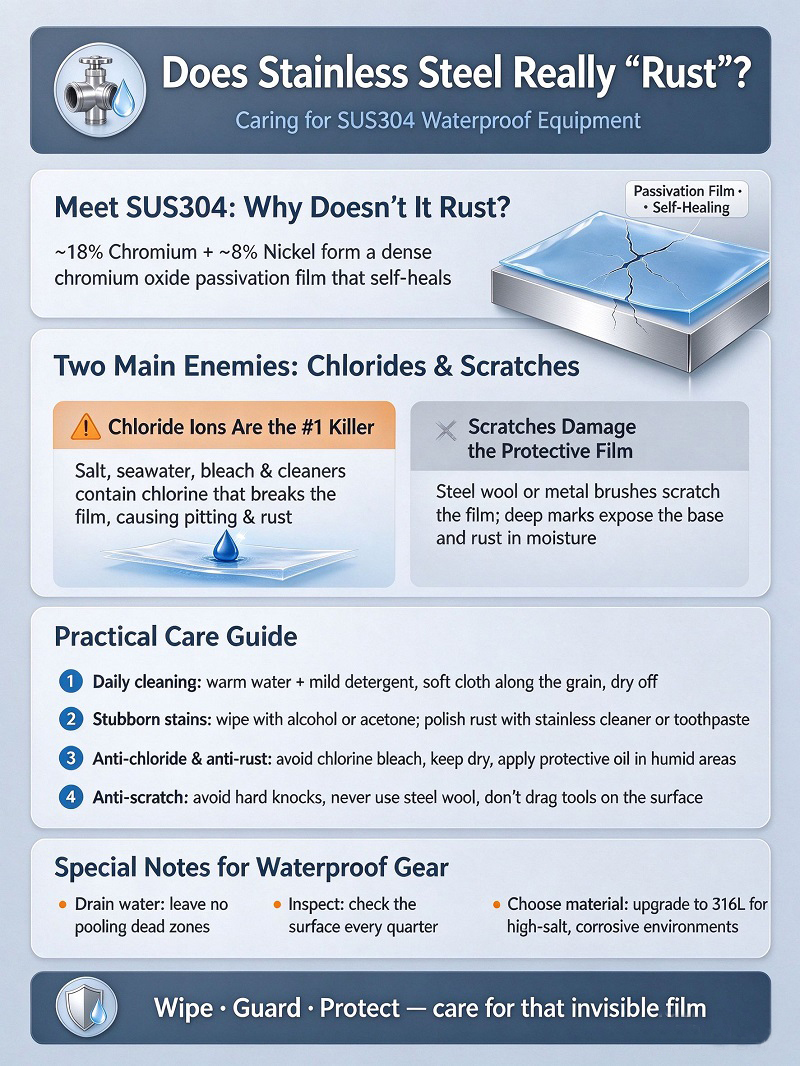
First, get to know SUS304: What makes it “stainless”?
SUS304 is the most classic grade in the austenitic stainless steel family. Its key components include:
- About 18% chromium—the key to rust resistance. Chromium forms a dense chromium oxide passivation layeron the surface.
- About 8% nickel—improves toughness and corrosion resistance.
- Plus small amounts of carbon, manganese, silicon, and other elements.
When exposed to air, chromium reacts instantly with oxygen to form a passivation layer. Although only a few atoms thick, this layer is extremely dense. It isolates the underlying metal from the external environment, thereby preventing corrosion. The layer is also capable of “self-healing” if damaged—this is the fundamental principle behind the rust resistance of stainless steel.
But here’s the catch: this film fears two things—chloride ions and mechanical damage.
Two Main Enemies: Chloride Ions and Scratches
Chloride ions are the No. 1 culprit. Salt, bleach, disinfectant, seawater, and some cleaning agents all contain chlorine. Chloride ions can penetrate and break down the passivation film. Once the film fails and isn’t repaired in time, pitting and rust spots appear. This is why stainless steel equipment near the sea rusts more easily.
Scratches destroy the protective film. Steel wool, metal brushes, and sharp hard objects can scratch straight through the passivation film. The film can heal itself, but if a scratch runs deep enough to expose the base metal—especially in a damp, chloride-rich environment—rust will start right at the scratch.
Practical Care Guide for Equipment Maintenance
1). Daily cleaning
Wipe with warm water and a neutral detergent using a soft cloth or sponge; wipe along the direction of the brushed finish to avoid crosswise scratches; then, dry the surface with a dry cloth to prevent water stains.
2). Remove stubborn stains promptly
For grease and adhesive residue: Start with a neutral detergent. For stubborn spots, gently wipe with alcohol or acetone, then rinse thoroughly with water. For rust stains: Spot-treat using a stainless steel cleaner or toothpaste, gently rubbing along the grain, then rinse with water and wipe dry.
3). Guard against chlorine and corrosion
When cleaning, avoid direct contact between the surface and chlorine-based bleach. If the equipment is stored or left unused for an extended period, keep it dry and well-ventilated to prevent water accumulation and salt residue. For outdoor or high-humidity environments, periodically apply a layer of stainless steel protective oil or anti-rust wax to create an additional protective barrier.
4). Prevent scratches and impacts
Avoid impacts from hard objects and prolonged contact with iron items during transport and installation; do not use steel wool or metal scouring pads for cleaning; and avoid dragging or scraping installation tools (such as shovels or wrenches) across the surface.
Special Notes for Waterproof Testing Equipment
Waterproofing test equipment operates year-round in environments characterized by high humidity, significant temperature fluctuations, and potential salinity. There are three “value-added” practices for its maintenance:
- Drainage and Water Accumulation Prevention— Ensure the equipment design eliminates “dead zones” where water can pool. Prolonged water stagnation is a primary cause of localized corrosion.
- Regular Inspections— Inspect surfaces quarterly. Address minor rust spots promptly to prevent them from spreading into widespread corrosion.
- Material Selection Based on Environment — For equipment exposed to high-salinity or highly corrosive environments (such as coastal areas or chemical plants), consider upgrading to 316L stainless steel. It contains molybdenum—an element absent in 304 stainless steel—which provides superior resistance to chloride-induced corrosion.
In Conclusion: Maintenance Is Really About Protecting That Film
SUS304 is favored because it strikes an ideal balance between corrosion resistance, strength, machinability, and cost-effectiveness, making it an excellent choice for equipment materials. However, its ability to operate reliably over decades depends largely on how well we maintain the invisible passivation layer on its surface.
Wipe it frequently, and protect it from chlorides and scratches. By following these three practices, your equipment will deliver long-lasting, reliable service in humid environments.