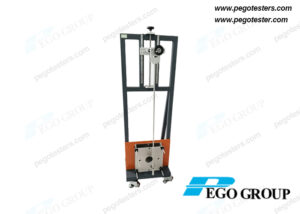
In the modern lighting industry, the safety and reliability of luminaires are core elements related to the safety of users’ lives and property. This paper focuses on the Suspended Luminaire Torque Testing Machine, an important device for testing the performance of luminaire suspension systems, is safeguarding the quality of luminaires with its precise testing capabilities. Taking the PEGO PG-TDQ suspended luminaire torque testing machine as a research object, this paper elaborates on the testing standards, device structure, working principles, application and operation of suspended luminaire torque testing machine, aiming to provide a comprehensive understanding of this machine for relevant industries.
1. Why do the luminaires need the suspended luminaire torque testing?
Luminaires, especially hanging ones like chandeliers and wall lamps, bear their own weight and possible external torsion forces during daily use. If there are design flaws in the suspension structure or insufficient material strength, loosening or breaking may occur during long-term use. This will not only cause damage to the luminaire but also may lead to safety accidents such as falling and injuring people. Therefore, conducting strict torsion performance tests on luminaire suspension systemsis a necessary link to ensure their safe and reliable operation within the expected service life.
2. Introduction and Standard of Suspended Luminaire Torque Test Device
The suspended luminaire torque test device is designed to meet the test requirement of IEC60598-1 clause 4.14.1 (test B). The device is specially used for suspended luminaires (such as chandeliers and pendant lamps). Its core function is to simulate the clamping action that the fixture may withstand during installation, use or accidental situations (such as gravity, rotation caused by external force collision, improper operation during installation, etc.). By applying a controllable clamping force or clamping angle, it detects whether the fixture has structural deformation, loose components, shrinkage and other problems, thereby ensuring that the product meets safety standards and avoids safety accidents such as falling and electric shock caused by structural failure.
3. Principle of the suspended luminaire torsion testing machine
The working principle of the suspended luminaire torsion testing machine is based on simulating the torsion forces and continuous load-bearing conditions that luminaires may encounter in actual use. First, the device firmly fixes the suspension parts of the luminaire through fixtures. Then, it applies a torsion force at a specific angle according to the testing standards and maintains it for a certain period. At the same time, it records the deformation, displacement of the luminaire suspension structure during the stress process, as well as whether there is breakage or loosening.
4. Application
The application range of the luminaire suspension torsion testing machine is very wide. It covers various hanging luminaires, such as living room chandeliers, dining room chandeliers, hotel lobby chandeliers, shopping mall decorative chandeliers, etc. It also includes some wall lamps and track lights that need to bear torsion forces. Whether it is traditional incandescent lamps, fluorescent lamps, or today’s popular LED luminaires, as long as they involve hanging installation methods, they need to undergo strict testing by this device. This is to verify the stability and torsion resistance of their suspension structures.
5. Operation
In terms of operating procedures, the luminaire suspension torsion testing machine follows strict steps. First, the operator needs to adjust the fixtures and set the parameter settings of the testing machine according to the testing requirements of standards. This is to ensure that the luminaire can be firmly and correctly fixed. Then, start the testing machine and perform the torsion test according to the preset program. During the test, pay close attention to the operation status of the device and the changes of the luminaire. After the test is completed, record the test data and results and evaluate the performance of the luminaire.
6. Maintenance
In order to ensure the normal operation and testing accuracy of the luminaire suspension torsion testing machine, daily maintenance work is essential. Regularly check the fixtures, sensors, transmission systems and other components of the device to ensure that their connections are firm and operation is flexible. Timely clean the dust and debris on the surface of the device to keep it clean. According to the requirements of the device manual, regularly lubricate the moving parts to reduce wear. At the same time, calibrate the device regularly to ensure the accuracy of test data.
With the continuous development of the lighting industry and technological progress, the requirements for luminaire quality are getting higher and higher. Correspondingly, the market demand for luminaire suspension torsion testing machines is also growing. On the one hand, production enterprises need more precise and efficient testing equipment to ensure product quality in order to improve their product competitiveness. On the other hand, regulatory authorities are increasing their supervision over luminaire safety, which also promotes the popularization and upgrading of testing equipment.
In conclusion, the luminaire suspension torsion testing machine plays an irreplaceable role in ensuring the safety of luminaires. It is not only an important tool for production enterprises to ensure product quality but also a powerful means for regulatory authorities to conduct quality supervision. What’s more, it is a solid barrier to safeguard the safety of consumers’ lives and property. On the road of continuous development of the lighting industry, the luminaire suspension torsion testing machine will continue to play its key role, helping to create safer and more reliable lighting products.