In the context of global economic and trade exchanges, cross-border electrical product circulation and international engineering supporting projects, plugs and sockets serve as the critical interface for power connection. They directly ensure electricity safety, equipment compatibility and electrical compliance. All countries formulate exclusive plug and socket standards based on local power grid operating conditions, safety concepts and industrial specifications, thus forming a differentiated pattern with incompatible product specifications.
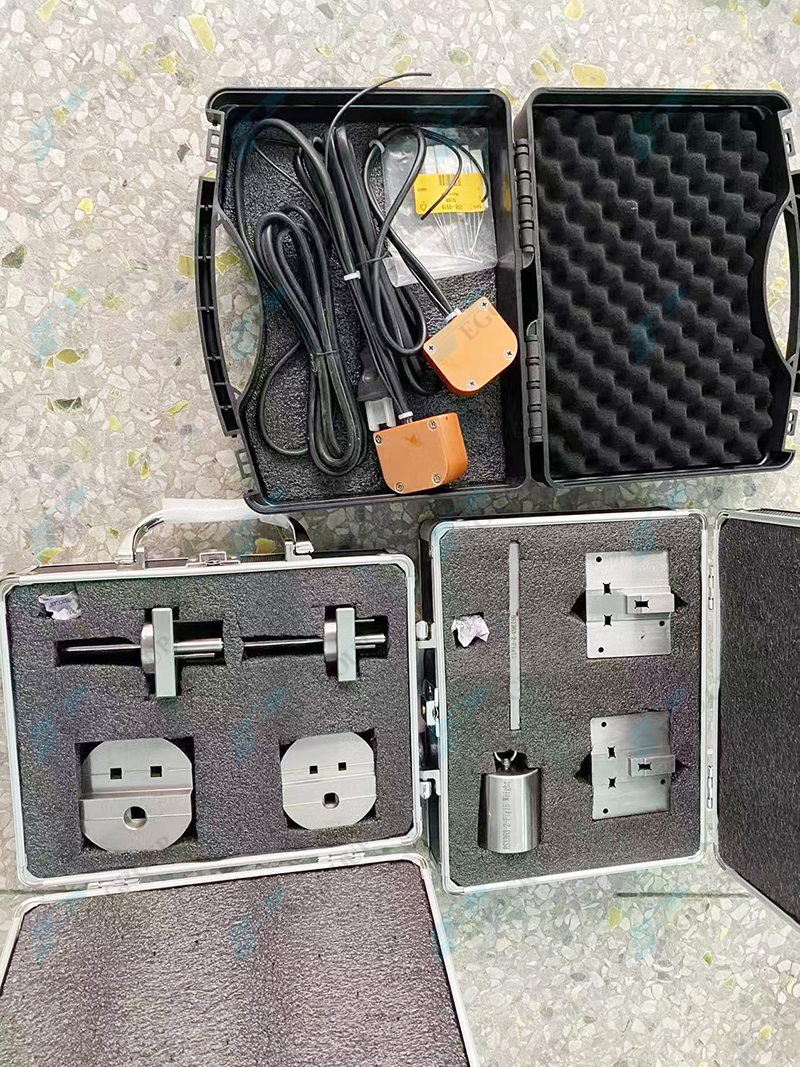
Plug and socket gauges act as core precision measuring tools to align with global standards, strictly control product dimensional accuracy, verify production compliance and guarantee insertion safety. They function as key tooling for enterprises’ mass production quality control, essential equipment for third-party certification, customs commodity inspection and market sampling inspection, and core technical benchmarks for the safe adaptation of products under different national standards.
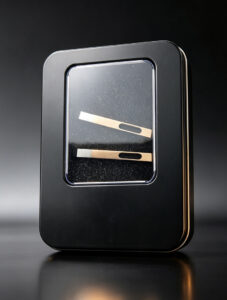
Plug and socket gauges are limit dimension testing tools customized in accordance with national electrical standards. They solidify key parameters including benchmark dimensions, tolerance thresholds, insertion depth, misplug prevention structure and grounding alignment through physical measuring tools. Following the simple testing principle of go gauge for qualification and no-go gauge for rejection, users can quickly check whether the overall size, pin spacing and socket specifications of plugs and sockets comply with mandatory standards without complex auxiliary instruments.
These gauges help enterprises eliminate potential risks such as poor contact, overheating and fire, electric shock and leakage from the source. They also guarantee the interchangeability of products from different manufacturers under the same standard and maintain the stable order of the global electrical supporting market.
I. Core Foundation: International General Benchmark and Underlying Design Logic of Gauges
The design of global plugs, sockets and supporting gauges takes IEC 60884-1 Plugs and Socket-Outlets for Household and Similar Purposes — General Requirements as the unified international benchmark. This standard defines safety criteria, dimensional design rules, testing methods and material durability bottom lines for gauges, and provides the fundamental basis for all countries to formulate local standards and customize dedicated gauges.
Countries refine technical parameters according to local grid voltage, frequency and actual power consumption scenarios, and launch differentiated local standards. Supporting dedicated gauges accurately replicate national standard parameters to achieve high-precision benchmark testing.
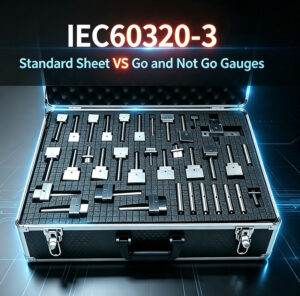
All gauges follow the limit dimension control principle and fall into two core categories: go gauges and not-go gauges, which perform complementary and indispensable functions. A go gauge simulates the benchmark size of qualified products and tests the minimum compliance threshold; products that achieve smooth insertion and extraction meet dimensional standards. A not-go gauge limits the maximum allowable deviation; products that fail to insert qualify as dimensionally compliant, while over-limit products are judged unqualified. This simple and efficient testing logic meets enterprises’ quality control demands for mass production and forms the unified core design principle for global gauges.
II. Regional Benchmarking: Detailed Adaptation of Mainstream Global Plug & Socket Standards and Dedicated Gauges
Global plug and socket systems mainly cover five major standard families: China, Europe, Britain & America, Australia & New Zealand, Japan & South Korea. These systems show obvious differences in voltage frequency, plug structure, physical dimension and protection level. Their supporting dedicated gauges are mutually incompatible and individually adapt to compliance testing requirements of a single national standard.
1. Chinese National Standard System: GB Standard Gauges for Civil and Industrial Full-scenario Power Use in China
Plugs and sockets in China comply with GB 1002 and GB 2099 series safety standards, adopting a unified 220V/50Hz power supply system. Mainstream products include two-pin flat plugs and three-pin grounding flat plugs, which are widely used in household, office and industrial scenarios. The national standard imposes strict control on pin thickness, width, center spacing, socket alignment and grounding pin size, and adopts stringent tolerances to avoid loose insertion and failure of electric shock protection.
Dedicated GB gauges are customized in line with national standards, covering segmented specifications such as two-pin type, three-pin grounding type, socket verification and insertion limit type. They focus on detecting pin shape deviation, parallelism and grounding pin alignment accuracy, and eliminate hidden dangers including contact overheating, insertion misalignment and grounding failure. They serve as essential core testing tools for factory quality inspection, market sampling and engineering acceptance.
2. European Union System: CEI & Schuko Standard Gauges for Full EU Cross-border Adaptation
The entire EU adopts a unified 220-230V/50Hz power supply system, with universal Type C two-round plugs and Type F Schuko grounding plugs complying with CEI 23-50 standards. The conventional 10A two-pin round plug features a pin diameter of 4mm and a center spacing of 19mm with strong universal compatibility. Few countries such as Switzerland retain independent exclusive specifications with appearances similar to European standards but different dimensions, requiring dedicated gauges for separate testing.
European standard gauges mainly control round pin diameter, center distance, insertion depth and grounding groove size, and strictly manage tolerance deviation via go and not-go gauges. They balance cross-border product compatibility and safety compliance within the EU, effectively avoid poor insertion failures, and act as indispensable testing tools to enter the EU market and obtain CE certification.
3. British & American System: BS & NEMA Standard Gauges for Differentiated Precision Control
British and North American electrical standards differ greatly, and their supporting gauges are completely non-interchangeable. The UK and regions adopting British standards follow BS 1363 standards with 220V/50Hz power supply, and adopt three-square flat three-pin plugs with built-in fuses. These products own a high protection level and set strict requirements on pin dimensions, fuse slot structure and misplug prevention design.
North America (the US and Canada) follows NEMA series standards in line with UL and CSA safety regulations, adopting a 110-120V/60Hz low-voltage power supply system. Mainstream products include Type A two-pin flat plugs and Type B grounding three-pin flat plugs with precisely limited pin size and spacing to adapt to local low-voltage power consumption conditions.
British standard gauges focus on testing three-pin alignment accuracy, fuse slot structure and misplug prevention performance. American standard gauges concentrate on controlling pin specifications and grounding pin offset. Both types of gauges are essential for products exported to Britain and America to pass local commodity inspection and market access certification. Any slight dimensional over-limit will result in unqualified judgment.
4. Australia & New Zealand System: AS/NZS Standard Gauges for Exclusive Dimensional Control of Plugs
Australia, New Zealand and Pacific island countries adopt AS/NZS standards with a 240V/50Hz power supply system. They are equipped with globally exclusive Type I plugs, divided into two-pin ordinary type and three-pin grounding type. The standard emphasizes control over plug inclination angle, length, spacing and grounding symmetry, and strengthens protection against loose insertion and outdoor power safety risks.
Dedicated AS/NZS gauges are specially designed for plug structures. They corely test plug inclination angle, length tolerance and socket alignment accuracy to avoid insertion failures fundamentally. All exported products must pass testing with these gauges to meet local market access and cross-border trade compliance requirements.
5. Japan & South Korea System: JIS Standard Gauges for High-precision and Stringent Testing under Low-voltage Conditions
Japan and South Korea have formed independent plug and socket standard systems. Japan follows JIS C 8303 standards with 100V low-voltage power supply. South Korea adopts 220V power supply and uses European-style round plugs. Both countries implement far stricter dimensional tolerance control than other regions and set extremely high requirements on gauge precision, wear resistance and structural stability.
JIS standard gauges are forged with high-precision alloy materials, featuring deformation resistance and long wear life. They accurately detect tiny pin dimensional deviation, insertion and extraction adaptability and electric shock protection compliance, and screen micron-level dimensional over-limit problems. They fully meet the refined and high-safety quality control standards of the electrical industry in Japan and South Korea.
III. Core Value: Gauges Build Dual Defense Lines for Global Plug & Socket Safety and Compliance
Global plug and socket standards cannot achieve unification in the short term, and the regional differentiated pattern will continue to exist for a long time. As physical carriers of standardization, plug and socket gauges hold irreplaceable industrial value.
For manufacturers, gauges guard the first pass of mass production quality control, standardize product compliance, and reduce defective output and after-sales safety hidden dangers. For regulatory and testing institutions, gauges provide objective and fair testing basis, curb the circulation of inferior products and prevent various electrical safety accidents. For cross-border trade, gauges set the basic threshold for market access, help products adapt to overseas standards and break down trade compliance barriers.
Small gauges define electrical dimensions, and precise tolerances safeguard power consumption safety for all users. Plug and socket gauges serve as physical embodiments of national electrical standards, the first defense line for full-scenario power safety, and essential precision tooling to support compliant circulation and coordinated development of the global electrical industry.