The Comparative Tracking Index (CTI) and Proof Tracking Index (PTI) test, also known as the tracking resistance test in the field of electrical insulating material testing, serves as a core assessment method to evaluate the resistance to electrical erosion, leakage prevention and anti-ageing performance of plastics, resins, insulating components and other materials. It is widely adopted in home appliances, low-voltage electrical apparatus, new energy, electronic equipment and other industries, and constitutes a vital basis for safety certification, material grading and market access of products. The accuracy, repeatability and authority of test data directly determine the performance judgment of materials and compliance results of products, while electrode material is the core factor controlling test precision.
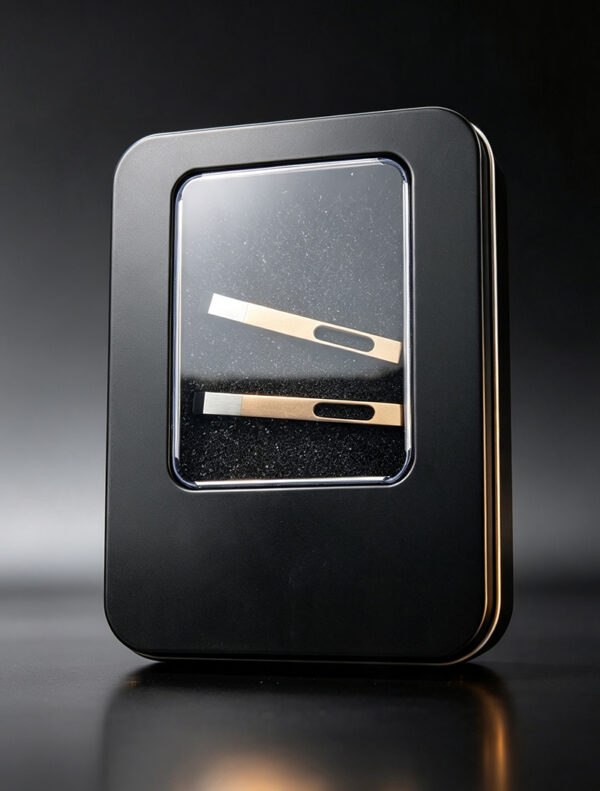
In accordance with the core standard IEC 60112, platinum electrodes with purity ≥99% are the benchmark electrodes specified for tracking resistance tests. Stainless steel, copper and other ordinary electrodes can only be used for preliminary internal screening. Test results obtained with such electrodes cannot support formal compliance test reports and are invalid for official certification purposes.
Extreme Chemical Inertia Eliminates Distortion of Test Data at Source
The tracking resistance test is carried out under harsh experimental conditions: 0.1% ammonium chloride electrolyte, high-voltage electric field, repeated micro-arcing, accompanied by continuous electrolytic reactions and high-temperature corrosion. Ordinary metal electrodes are prone to electrochemical corrosion in such environments, continuously releasing metal cations. These impurities adhere to specimen surfaces and artificially form extra conductive paths, significantly accelerating tracking failure. Consequently, measured CTI and PTI values become lower than the true level, leading to misjudgment of material performance.
Platinum features outstanding chemical inertness, resistance to acid, alkali and corrosion, and low susceptibility to electrolytic dissolution. It maintains stable performance under combined impacts of electrolyte, high-voltage electric field and high-temperature electric arcs. No impurities are released during testing, and no extra conductive interference occurs. Test results can truly reflect the inherent tracking resistance of insulating materials, ensuring all data are objective, accurate and free of deviation.
Stable Electrical Conductivity and Oxidation Resistance Ensure Constant and Controllable Test Conditions
Micro-arcs continuously generate at electrode tips during testing, bringing local temperatures up to hundreds of degrees Celsius. For conventional electrodes such as copper and stainless steel, insulating oxide films rapidly form on surfaces under repeated high-temperature ablation and energized operation. This causes continuous fluctuation of electrode contact resistance and disordered drift of electric field distribution. Consistent test conditions cannot be achieved for parallel specimens or repeated tests, resulting in widely scattered data and poor repeatability.
Platinum electrodes possess unique anti-oxidation properties. No insulating oxide layer develops under high temperature and high pressure, so electrical conductivity remains constant and electric field distribution between electrodes stays uniform. Whether for single long-duration tests or continuous batch testing of multiple specimens, consistent experimental conditions can be maintained. The repeatability and stability of test data are greatly improved, addressing the common industry challenges of severe data fluctuation and uncontrollable results when using ordinary electrodes.
High Arc Erosion Resistance Preserves Long-Term Standard Test Precision
Tracking resistance tests impose strict requirements on electrode geometric parameters. The standard specifies electrodes to be machined with a 30° inclined surface and cutting edge width ranging from 0.01 mm to 0.1 mm. Precise tip geometry is a prerequisite for electric field concentration and simulating real leakage conditions. Ordinary metals are relatively soft; after repeated arc ablation, electrode tips are easily worn, rounded and deformed. This directly changes electric field strength and test conditions, invalidating all subsequent tests.
Platinum electrodes deliver excellent resistance to high temperature and arc erosion with minimal material loss under thermal ablation. The standard inclined angle and cutting edge profile can be maintained for an extended period, reducing the frequency of electrode replacement and repeated calibration.
Preferred Industry Solution to Safeguard Electrical Safety Quality
Platinum electrodes have become standard core accessories for tracking resistance tests, adopted by material research laboratories, authoritative third-party testing institutions, as well as manufacturers of home appliances, new energy equipment and industrial control electrical products. Benefiting from multiple advantages including corrosion resistance, stable performance, arc erosion resistance and full standard compliance, platinum electrodes overcome numerous drawbacks of ordinary electrodes such as large test error, poor repeatability and invalid test reports. They provide accurate and reliable technical support for insulating material performance classification, product safety upgrading and implementation of industry standards.