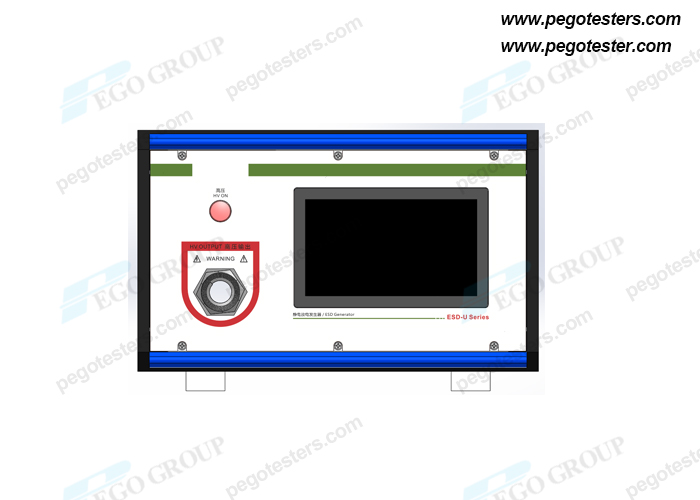
In the era of shrinking, faster, and more complex electronic devices, electrostatic discharge (ESD) stands as one of the most perilous threats to electronic circuits. Even minor discharges, regardless of their energy level, can trigger system malfunctions, data corruption, or irreversible damage. Unlike conventional testing methods that often miss hidden flaws, ESD test equipment is specifically engineered to simulate real-world electrostatic stress. Consequently, it enables engineers to detect abnormal discharge behavior that might remain dormant under normal operating conditions. This article explores the critical role of ESD generator in identifying these issues and, ultimately, enhancing the reliability of electronic products.
The Nature of Abnormal Discharge in Sensitive Electronics
Sensitive circuits respond to electrostatic events in diverse ways, shaped by their design, layout, and protection mechanisms. Abnormal discharge behavior can manifest as unexpected resets, latch-ups, corrupted logic states, or distorted analog signals. Notably, these effects unfold in nanoseconds, evading detection by standard diagnostic tools. A key challenge with ESD is its cumulative damage potential: a circuit may withstand multiple discharges initially but degrade over time. To address this, ESD test equipment generates repeatable, well-defined discharges. As a result, engineers can identify patterns rather than isolated incidents.
Controlled Discharge: Revealing Circuit Weaknesses
ESD test equipment replicates the electrostatic sparks that occur during human or machine contact in real-world scenarios. By applying discharges to specific test points and observing the circuit’s real-time response, engineers can link abnormal behavior to precise discharge parameters. Importantly, the ability to repeat the same discharge is crucial. Consistent abnormal responses at a given voltage or contact point indicate ineffective protection or flawed grounding design. This reproducibility eliminates one-time anomalies, ensuring engineers target genuine design weaknesses.
Waveform Consistency and Discharge Path Analysis
Abnormal discharge behavior is frequently tied to unintended current paths within a circuit. ESD test equipment delivers discharges with well-defined current waveforms. This enables engineers to analyze how energy distributes throughout the system. By comparing circuit responses across different discharge points, they can map internal current paths and identify deviations. High-quality systems, such as those developed by PEGO ELECTRONICS, maintain waveform consistency across repeated tests. Therefore, observed behavior stems from the circuit itself rather than the test equipment.
Polarity, Repetition, and Cumulative Impact
Electrostatic discharges can carry positive or negative charges. Moreover, circuits often respond asymmetrically to each polarity. ESD test equipment offers precise control over polarity, revealing vulnerabilities that may be masked in one direction. Additionally, adjustable repetition rates allow engineers to simulate frequent human contact or automated manipulation. This exposes cumulative damage in marginally designed circuits. Furthermore, this feature is invaluable for products intended for high-contact environments.
Grounding and Reference Conditions: Ensuring Reliable Results
Controlled test environments are essential for accurate detection of abnormal discharge. Poor grounding introduces variability, masking or amplifying circuit responses. ESD test equipment relies on defined reference planes and grounding structures to ensure repeatability. By verifying grounding integrity before each test sequence, professional systems eliminate random variations in discharge paths. Thus, engineers can attribute abnormalities to circuit design rather than test setup flaws.
Distinguishing Temporary and Permanent Effects
Not all abnormal discharge behavior leads to permanent damage. ESD test equipment helps differentiate between recoverable malfunctions and irreversible failures. Recoverable issues, such as firmware glitches, can be addressed through filtering or layout optimization. Irreversible failures, however, indicate inadequate component protection. Through repeated discharges and long-term behavior monitoring, engineers can assess whether performance degrades over time. This is critical for reliability and warranty risk evaluation.
Conclusion
ESD test equipment has evolved from a compliance tool to an indispensable design instrument. It empowers engineers to anticipate and mitigate electrostatic risks. By simulating controlled electrostatic stress, monitoring real-time performance, and analyzing discharge patterns, these systems uncover latent weaknesses that conventional testing misses. With stable waveforms, precise voltage control, and repeatability, modern ESD test equipment provides the accuracy and predictability needed to develop robust, reliable electronic products. As manufacturers like PEGO ELECTRONICS continue to advance ESD testing technology, engineers gain ever-greater capabilities. In the end, this allows them to protect sensitive circuits from the unpredictable nature of electrostatic discharge in real-world operations.