The withdrawal force test is a critical test procedure designed to verify that socket-outlets for household and similar purposes or appliance couplers are safe and secure when in use. The withdrawal force test is a key step to ensure the safe connection of the equipment, its importance is as follows:
- Ensure the safety performance of electrical appliances: The withdrawal force test is a key step in detecting the contact force between the plug and the socket. Appropriate withdrawal force can ensure good contact between the plug and the socket, prevent heating, flickering, breakdown and other problems caused by poor contact, and thus improve the safety performance of the electrical appliances.
- Extend the service life of electrical appliances: Too small withdrawal force will lead to insufficient contact area between the plug and the socket, which may cause safety problems; while too large withdrawal force will damage the plug or socket and affect the service life of the electrical appliances. Through the withdrawal force test, it can be ensured that the plug-in and pull-out force is within a reasonable range, thereby extending the service life of the electrical appliances.
- Comply with standards and regulatory requirements: Different types of electrical sockets have different plug-in and pull-out force standards. Generally speaking, the plug-in and pull-out force of the socket should be between 2 and 3 kilograms to ensure good contact between the plug and the socket. In a humid environment, this standard value will be reduced to prevent safety problems such as short circuits and fires caused by moisture.
- Improve consumer trust: Through the withdrawal force test, companies can provide detailed quality inspection reports to enhance consumer trust in their products. When consumers are purchasing products, seeing relevant quality inspection reports can enhance their purchasing confidence.
- Optimize design and production process: The withdrawal force test can discover potential problems in product design and production, help companies improve design and optimize production processes, thereby ensuring product quality and extending service life.
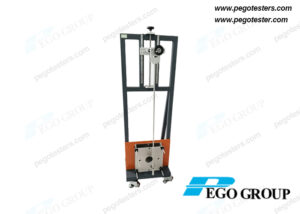
Pego has two style apparatus for maximum withdrawal force test, one of which is the Apparatus for Verification Maximum and Minimum Withdrawal Force of Sockets, which is used to test sockets for household or similar purposes, and the other is the Apparatus for Checking The Withdrawal Force of Appliance Couplers, their main features are as follows:
Item | Apparatus for Verification Maximum and Minimum Withdrawal Force of Sockets | Apparatus for Checking The Withdrawal Force of Appliance Couplers |
Specimen | Sockets for household or similar purposes | Coupler inlets and connectors |
Standard | IEC60884-1 clause 22 and figure 18/19 and GB2099.1 | IEC60320-1 clause 16 and figure 3 and GB14765.1 |
Test purpose | It is applied to verify if the withdrawal force of the test plug and test single-pins from socket-outlets can be meet the standard requirements | For checking the maximum withdrawal force of the appliance coupling. The minimum withdrawal force is achieved by inserting the single-pin by hand. |
Structure | Bracket, principal mass, supplementary mass, hook (clamping device), test plug (can be customized according to drawings) | consists of control cabinet, mounting plate, heating device, appliance input socket (can be customized according to drawings), weight hook, principal weight and supplementary weight. |
Test Principle | Apply the maximum withdrawal force specified in the standard (the total force of the principle weight, supplementary weight, hook (clamping device), and test plug) to the test plug, and the plug should be removed from the socket. | Fix the appliance inlets/plug connector to the bottom plate of the heating device C shown in the figure, so that the pin of the appliance input socket is vertical and the free end of the pin is facing downward. Select the corresponding weight for the corresponding sample, insert the connector sample into the appliance input socket, and hang the corresponding weight on the end of the connector wire. The connector should not shake when the main weight is suspended, and the supplementary weight is allowed to fall from a height of 5cm on the main weight. The connector should not remain in the appliance input socket. For testing connectors under hot conditions and extremely hot conditions, the heating function should be turned on, and the maximum pull-out force test should be started after the temperature is reached. |