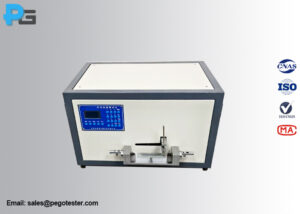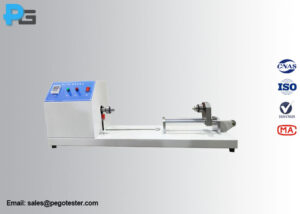
Rectangular Wire Mandrel Winding Test Apparatus
1. Introduction
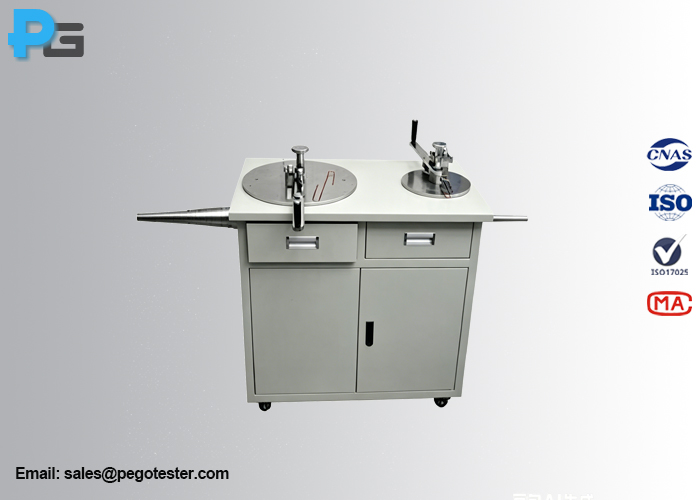
The rectangular wire mandrel winding test apparatus is designed according to IEC60851-3 clause 6.2.2 figure 4 and GB/T4074.3 clause 6.2.2 figure 4. It’s suitable for winding testing of various rectangular wires with a nominal conductor diameter of 1.60mm or less—including enameled rectangular wire, paper-insulated rectangular wire, glass-fiber-insulated rectangular wire, and film-wrapped wire—as well as corresponding copper and aluminum rectangular wires.
A straight piece of wire approximately 400mm in length shall be bent through 180° round a polished mandrel of the diameter given in the relevant standard in two directions to form an elongated S-shape. The straight part between the U-shape bends shall be at least 150mm. Care should be taken to ensure that the specimen does not buckle or depart from a uniform bend.
2. Specification
| Winding Host | 1st host for flatwise winding (on the thickness) | 2nd host for edgewise winding (on the width) |
| Flange diameter | Ø180mm | Ø260mm |
| Bending arm length | 300mm | 400mm |
| Bending arm rotation angle | >180° | |
| Test rod | Stepped rods: 3pcs (comprising 36 distinct circular diameters ringing from Ø4-Ø60mm,
Mandrel (standard diameters): 62pcs, Ø4-Ø80mm |
|