Against the backdrop of the in-depth globalization of the automotive industry, the environmental adaptability of components directly determines the safety, reliability, and service life of the entire vehicle. Among them, moisture resistance and waterproof performance, as key quality indicators of automotive components, need to be strictly controlled through unified and standardized test standards. As the core standard for moisture and waterproof tests of automotive components in the Japanese Industrial Standards (JIS), JIS D0203 specifies test methods, technical requirements, and judgment criteria. It is widely used in the production and testing of Japanese-made automobiles and related components worldwide, and has become an important guideline for ensuring the environmental reliability of components.
I. Standard Overview: Origin and Core Positioning
JIS D0203, full name “Method of Moisture, Rain and Spray Test for Automobile Parts”, is formulated and issued by the Japanese Standards Association (JSA), with the current valid version being JIS D0203-1994. The original purpose of this standard is to solve the problems of functional failure and corrosion damage of automotive components caused by exposure to environmental factors such as moisture, rain, and spray during actual use, establish unified test specifications, and ensure that components can maintain normal functions in various water-related environments.
In addition, the standard clearly defines its scope of application: it only specifies the test methods for moisture resistance and waterproof performance of automotive components. Excluding tests mainly for weather resistance and corrosion resistance, as well as water pressure, air tightness, or leakage tests unrelated to the external water-exposed state of components.
As one of the core standards for testing Japanese automotive components, JIS D0203 complements the European ISO 16750, DIN 40050-9, and American ISO 20653 standards, jointly forming the global standard system for environmental reliability testing of automotive components. Its test methods and technical requirements have also been adopted by many multinational automotive enterprises and become an important basis for component access.
II. Core Content: Test Classification and Technical Requirements
The core content of the JIS D0203 standard is to divide the moisture and waterproof tests of automotive components into four categories and eight specific test items. Each item clearly defines the test purpose, technical parameters, and operational requirements to ensure the scientificity and repeatability of the tests. The specific requirements for each type of test are as follows:
(1) Moisture Tests (M1, M2)
Moisture tests mainly simulate the service scenario of components in a humid environment and evaluate their ability to resist moisture erosion, divided into two sub-items:
- M1 Test: It aims to investigate the functional stability of components in a humid environment. The test shall be carried out in a closed container to create a mixed atmosphere of air, water droplets, and water vapor, with the temperature controlled at approximately 32℃, and the test duration of 8 hours. During the test, the test piece shall be rotated around the horizontal axis at a speed of 1.5R/min to ensure uniform contact of the test piece with the humid environment.
- M2 Test: It targets the performance of components in a high-temperature and high-humidity environment. The test temperature is controlled at approximately 60℃,without the need to create an additional gas-liquid mixed atmosphere. And the test duration is 1 hour, focusing on evaluating the functional changes of components under high-temperature and high-humidity conditions.
(2) Rain Tests (R1, R2)
Rain tests simulate the scenario where components come into contact with rainwater during vehicle operation, divided into indirect and direct water droplet contact, with the core purpose of evaluating the ability of components to resist rainwater erosion:
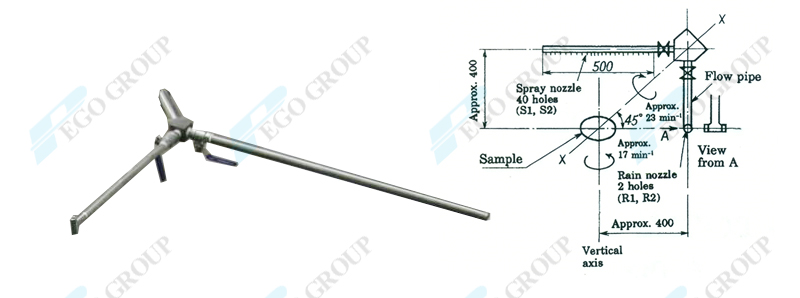
- R1 Test: Simulates the direct water droplet contact scenario. The test water pressure is controlled at 0.01MPa, using 2 nozzlesof specified size, with a total water discharge of not less than 1.9L/min, normal water temperature, and a test duration of 10 minutes. It focuses on evaluating the functional stability of components after contact with water droplets.
- R2 Test: Simulates the indirect wind-rain or splashing scenario. The water pressure is controlled at 0.03MPa, also using 2 nozzles, with a total water discharge of not less than 3.2L/min, normal water temperature, and a test duration of 10 minutes. It is applicable to components that are not directly exposed to rain but may come into contact with splashing water, such as automotive interior parts and some chassis components.
(3) Spray Tests (S1, S2)
Spray tests simulate harsh scenarios such as heavy rainfall and high-pressure flushing, evaluate the ability of components to directly withstand spray, and are core test items for automotive external components (such as vehicle lights, bumpers, and sensors):
- S1 Test: Simulates the direct spray scenario. The test water pressure is controlled at 0.10MPa, using 40 nozzles with a diameter of 1.2mm, with a total water discharge of not less than 24.5L/min, normal water temperature, and a test duration of 30 minutes. Simulating the performance of components under ordinary heavy rainfall conditions.
- S2 Test: Simulates the heavy spray scenario. The water pressure is increased to 0.30MPa, also using 40 nozzles with a diameter of 1.2mm, with a total water discharge of not less than 39.2L/min, and the test duration is extended to 1 hour. It simulates extreme scenarios such as high-pressure flushing and heavy rain, and is applicable to components with extremely high waterproof requirements, such as electrical components in the engine compartment and vehicle light seals.
(4) Immersion Tests (D1, D2, D3)
Immersion tests simulate the scenario of accidental or long-term immersion of components, evaluate their sealing performance, and are divided into three sub-items covering different immersion depth and duration requirements:
- D1 Test: Simulates the temporary immersion scenario. The test duration is 5 minutes, and the test piece is immersed to its lower surface. The water temperature shall be more than 10℃ lower than the temperature of the test piece. It focuses on evaluating the functional recovery ability of components after short-term accidental immersion, such as automotive door panels and window seals.
- D2 Test: Simulates the long-term immersion scenario. The test duration is 10 minutes, and the upper surface of the test piece is immersed at a water depth of 100mm, with the water temperature controlled at approximately 30℃. It is applicable to components that may be in long-term contact with water, such as chassis drainage components and waterproof connectors.
- D3 Test: Targets special waterproof scenarios. The test duration is 10 minutes, and the upper surface of the test piece is immersed at a water depth of 100mm, with the water temperature controlled at approximately 50℃. It is mainly used for special-purpose waterproof components (such as special automotive components related to underwater operations) to evaluate their sealing performance in a high-temperature immersion environment.
(5) General Test Requirements
In addition to the above specific test items, the JIS D0203 standard also specifies general test requirements: the test shall use specified test equipment, and the test piece shall be installed in the actual service state. In rain and spray tests, the test piece shall be kept at a distance of approximately 400mm from the nozzle, the nozzle shall rotate at a speed of approximately 23 R/min, and the test piece shall rotate around the vertical axis at a speed of approximately 17 R/min. If the component is equipped with air vents or drainage ports, it may be closed for the test according to test needs. If necessary, the test time specified in the standard can be taken as one cycle, and the test can be repeated multiple times according to the agreement between the supplier and the buyer to evaluate the long-term moisture resistance and waterproof performance of the components.
III. What Products Can PEGO Provide to Meet the Relevant Requirements of JIS D0203 Standard?
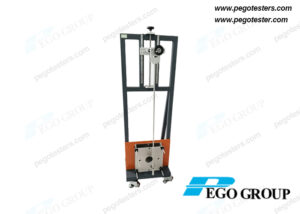
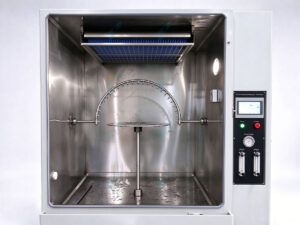
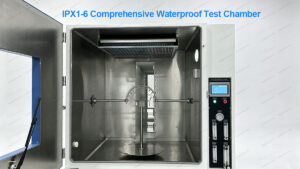
PEGO spray and rain test chambers are specially designed for the JIS D0203 standard, which can meet the relevant requirements of spray tests (S1, S2) and rain tests (R1, R2). The equipment adopts a box-type interface design, and the test water can be recycled, effectively improving resource utilization. the rotation speed of the rotating tube and the distribution of nozzles are strictly designed in accordance with the standard specifications to ensure the accuracy and compliance of test results. At the same time, the equipment can also be used with a swing tube to meet the test requirements of IPX3 and IPX4 in the IEC60529 standard.